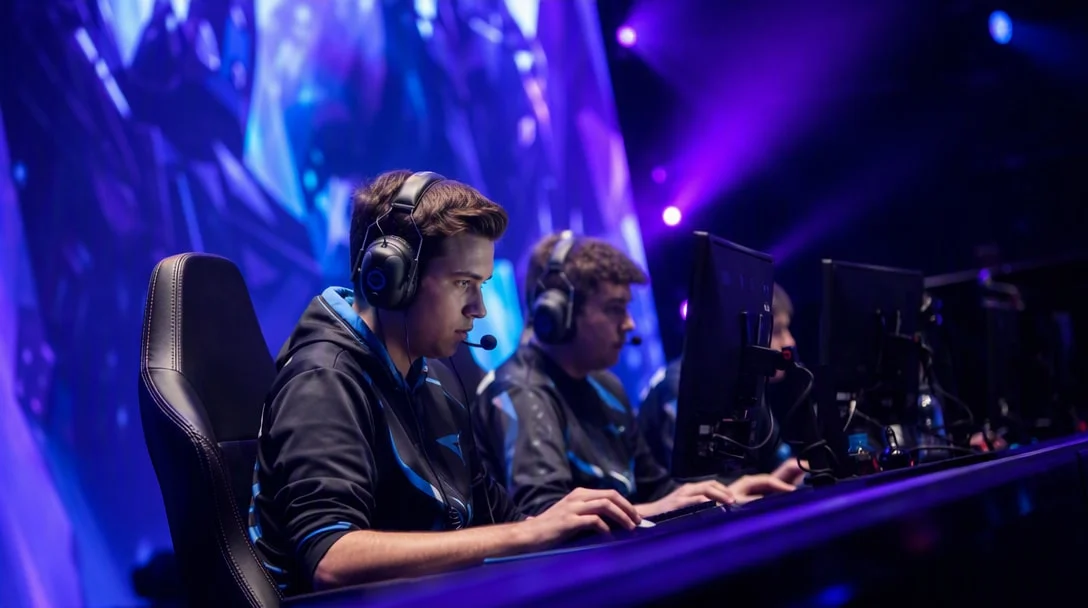
This guide to the Free Fire World Series covers how the tournament actually works. While most coverage of Free Fire focuses on the game itself, there’s a whole competitive side most casual players never see: the Free Fire World Series (FFWS), one of the most-watched mobile esports tournaments in the world. If you’ve only ever played Free Fire casually, here’s what the competitive scene actually looks like in 2026, and why it matters even if you never plan to compete.
Table of Contents
What Is the Free Fire World Series?
The Free Fire World Series is Garena’s flagship international tournament, running since 2019. It brings together top-ranked teams from regional qualifiers across Latin America, Southeast Asia, South Asia, and MENA to compete for a global title, prize money, and bragging rights as the best Free Fire team in the world (full historical results are tracked on Liquipedia’s Free Fire esports wiki).
Why Free Fire’s Esports Scene Is Bigger Than You’d Expect
Free Fire’s competitive success comes down to the same design choices that made it popular casually: short, ten-minute matches translate well into fast-paced tournament broadcasts, and the game’s strong presence in regions with budget Android hardware means its esports fanbase is enormous, even if it’s less visible in North America and Europe than PC-focused titles.
The game’s continued inclusion in high-profile crossover events like the Esports World Cup 2026 is a strong signal of staying power — nearing its tenth year, Free Fire is still being taken seriously at the top competitive level, not just as a casual mobile time-killer.
How Competitive Free Fire Differs From Casual Play
Casual players mostly experience Free Fire through solo or squad matches in the standard Battle Royale mode, or quick 4v4 rounds in Clash Squad. Competitive play sharpens both: pro teams draft strategies around landing zones, rotation timing, and resource control far more rigorously than the average match, and Clash Squad’s fixed-economy format (recently expanded with the CS Perk Points system) makes it especially well-suited to structured, round-based competitive play.
Following the Scene as a Fan
You don’t need to be a competitive player to follow FFWS — most matches are streamed, and regional qualifiers happen well before the global finals, giving fans months of build-up to follow their favorite regions and teams. It’s a genuinely useful lens for casual players too: watching top-level play is one of the fastest ways to pick up positioning and rotation habits that translate directly back into your own matches.
It’s also worth following the regional qualifiers specifically, not just the global finals. Because the Free Fire World Series draws from such geographically distinct regions, playstyles genuinely differ — some regions lean toward aggressive early-game fighting to rack up eliminations, while others play more conservatively for placement points, saving engagements for the final circles. Watching a full regional qualifier before the global finals gives useful context for why certain teams approach the same map so differently once they’re all competing on the same stage.
How the Free Fire World Series Format Typically Works
Like most battle royale esports, the Free Fire World Series doesn’t use straight single-elimination brackets the way traditional 1v1 or team-vs-team esports do. Instead, teams typically compete across multiple matches within a match day, earning points for both placement (how far they get in each match) and eliminations (how many opposing players they take out). Those points accumulate across the group stage, with the highest-scoring teams advancing to playoffs and eventually the grand finals. This point-based format rewards consistency across many matches rather than a single lucky win, which is part of why watching an entire match day — not just the final match — gives a much clearer picture of who’s actually dominating.
This scoring approach also shapes team strategy in ways that aren’t always obvious to newer viewers. A team sitting in second-to-last place with several eliminations can still be ahead on total points compared to a team that survived longer but fought less — which is why pro teams sometimes make plays that look aggressive or risky to a casual eye but make complete sense once you’re tracking the full points table rather than just who’s still alive.
What Makes Battle Royale Esports Different to Watch
If you’re used to traditional esports like MOBAs or 1v1 shooters, battle royale tournaments take some adjustment. With dozens of players and squads alive simultaneously, broadcasts typically use a “director’s cut” approach, cutting between multiple ongoing fights rather than following one continuous match from start to finish. Casters often track a live points leaderboard alongside the action, since a team quietly surviving to a high placement can matter as much as a flashy elimination streak. It rewards a different kind of attention than traditional esports — more like tracking a whole field in motorsport than watching a single head-to-head duel.
Free Fire’s Place Among Mobile Esports Titles
Free Fire isn’t the only mobile title with a serious competitive scene — Call of Duty: Mobile and several other battle royale and shooter titles run their own tournament circuits. What sets the Free Fire World Series apart is longevity (running since 2019, making it one of the longer-established mobile esports events) and its particular strength in regions — Latin America, Southeast Asia, South Asia, and MENA — where mobile-first gaming dominates over PC and console. For more on how mobile esports overall is gaining ground alongside traditional PC and console competitive scenes, see our piece on the Esports World Cup and the rise of mobile esports.
Why This Matters Beyond the Tournament Itself
A thriving esports scene does more for a game than generate viewership during tournament weeks. It gives Free Fire a visible, aspirational top tier that casual players can watch and learn from, it justifies continued competitive-focused updates like the Clash Squad Perk Points system, and it signals to Garena that continued investment in the game nearing its tenth year is still worthwhile. For a live-service game, a strong esports scene is often one of the clearest signs it isn’t winding down — it’s a sign the developer, the players, and increasingly the broader esports industry all still see long-term value in it.
Getting Started: How to Watch Your First Match
If you want to check out the Free Fire World Series for the first time, a few tips make it easier to follow:
- Start with a playoff or grand finals match rather than an early group-stage match — the stakes and quality of play are both higher, making it easier to follow what matters.
- Keep an eye on the points overlay, not just the action, since placement points often decide the outcome as much as eliminations do.
- Pick a region or team to follow across the tournament — it gives the group stage a narrative thread instead of feeling like disconnected matches.
- Watch with official English-language broadcasts if you’re not familiar with regional commentary styles, since casting quality and analysis depth can vary between regional streams.
One more thing worth knowing as a new fan: qualification paths can change slightly year to year as Garena adjusts regional splits and points structures based on the previous season. It’s worth checking the current season’s official rules before assuming last year’s format carries over exactly — the core points-based system tends to stay consistent, but specifics like the number of qualifying teams per region can shift.
Frequently Asked Questions
How long has the Free Fire World Series existed? It has run since 2019, making it one of the longer-running mobile esports tournaments still active today.
Do I need to be a pro to enjoy competitive Free Fire? No — most fans simply watch streamed matches. Regional qualifiers are how teams earn their spot at the global finals.
Is Free Fire part of any bigger esports events? Yes, it has featured in crossover events like the Esports World Cup, alongside its own dedicated World Series tournament.
How does scoring work in the Free Fire World Series? Teams earn points for both match placement and eliminations across multiple matches, with the highest cumulative score advancing through group stages to the finals.
Where can I watch the Free Fire World Series? Matches are typically streamed on official Garena and Free Fire esports channels, with regional broadcasts often available in multiple languages.
Key Takeaways
- The Free Fire World Series has run since 2019 and remains one of the biggest mobile esports tournaments globally.
- Free Fire’s short match length and mobile-first design translate unusually well into tournament broadcasts.
- Clash Squad’s structured, round-based format is especially well-suited to competitive play.
- Watching top-level matches is a practical way for casual players to improve their own game sense.
- Points-based scoring across multiple matches means placement and eliminations both matter — not just who survives longest.
- Regional qualifiers are worth watching in their own right, not just the global finals, since playstyles vary meaningfully by region.