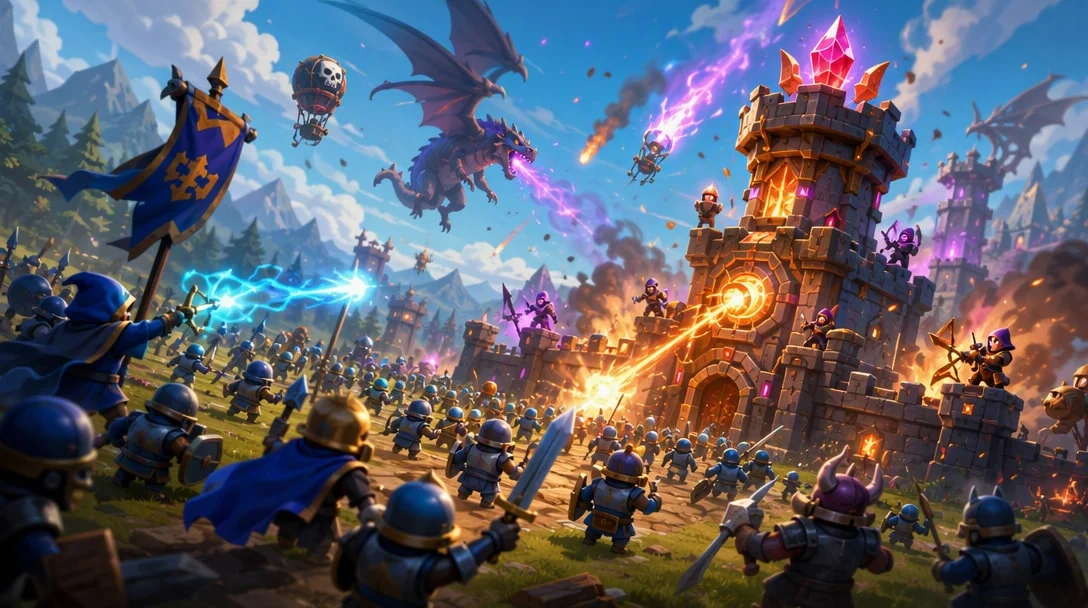
This Clash Royale review looks at whether the tower-defense-meets-card-game formula still holds up nearly a decade later. Supercell’s Clash Royale has held a place among mobile gaming’s top strategy titles since 2016, and in 2026 it still pulls a 4.5-star rating from 41.7 million reviews and 500 million+ downloads. This review looks at what keeps the tower-defense-meets-card-game formula working nearly a decade later.
Table of Contents
Clash Royale Review: At a Glance
| Detail | Information |
|---|---|
| Developer | Supercell |
| Category | Strategy / Card Battler |
| Rating | 4.5 / 5 (41.7M+ reviews) |
| Downloads | 500,000,000+ |
| Price | Free (in-app purchases, including random items) |
Core Gameplay
The core loop this Clash Royale review keeps coming back to: matches pit two players against each other in real-time PvP: build a deck from 100+ unique cards, deploy troops and spells to attack your opponent’s towers, and defend your own King’s Tower using careful timing and card placement. Matches are short — typically a few minutes — which keeps the pace brisk and the game easy to fit into short breaks.
Key Features
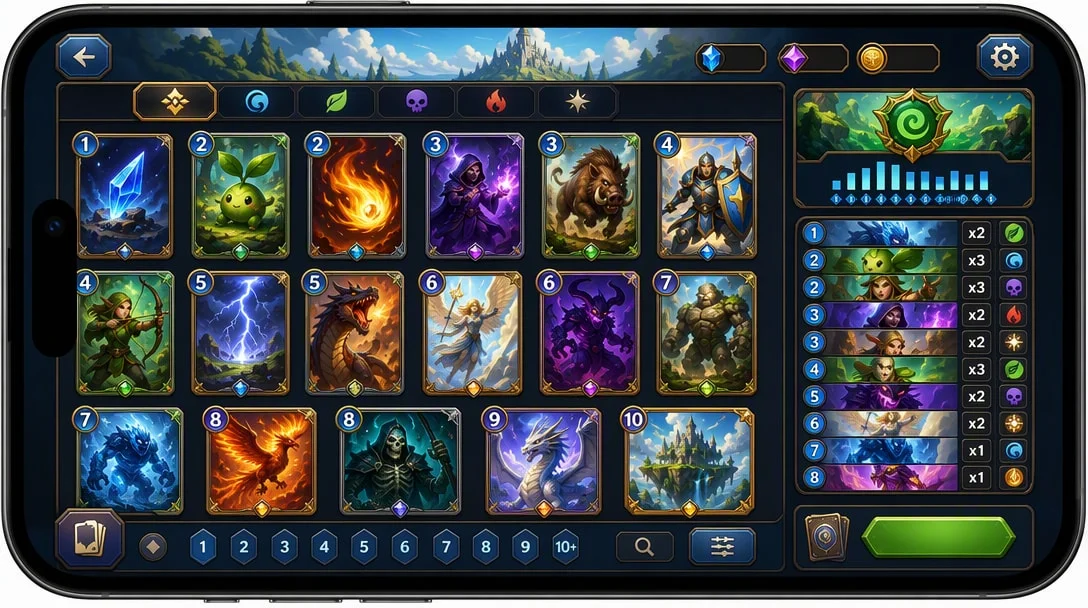
- Deep card roster: over 100 unique cards to unlock and experiment with across different deck archetypes.
- Evo Shards: a system for upgrading cards into stronger “evolved” versions, adding a newer progression layer on top of the base card system.
- Real-time multiplayer: matches are played live against opponents worldwide, not against AI or asynchronously.
- Seasonal ranked play: resets periodically and rewards consistent performance separate from the permanent trophy road.
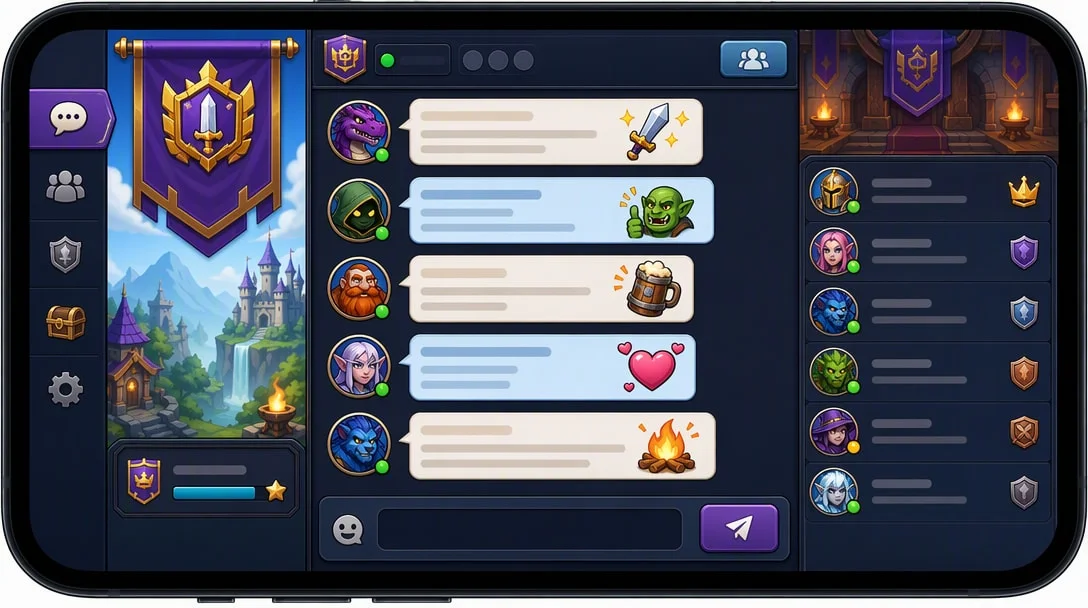
- Clans and social play: join or form clans to share cards, strategize, and compete together — a lighter, more casual take on the team play found in Call of Duty: Mobile.
Monetization
Full details on card balance changes are tracked on Supercell’s official Clash Royale site. The game is free to download and play, with optional real-money purchases for chests, cards, and cosmetics, including randomized items. Supercell explicitly notes in the store listing that in-app purchases can be disabled at the device level if you’d prefer to play without any spending option available at all — a useful note for parents setting up a younger player’s device.
How the Ranking System Works
Clash Royale uses a trophy-based ranking system: winning matches earns trophies, losing costs them, and your trophy count determines which arena (and which cards) you have access to. Beyond casual ladder play, seasonal ranked play resets periodically and rewards consistent performance with cosmetic and progression rewards separate from the base trophy road. This dual structure — a permanent trophy count alongside resetting seasonal ranks — gives both new players a sense of steady progress and veteran players a reason to keep competing each season rather than plateauing once they’ve unlocked everything.
Common Deck Archetypes to Know
A recurring theme in this Clash Royale review’s research: new players often find deck-building overwhelming with 100+ cards available, but most successful decks fall into a few broad archetypes:
- Beatdown: build up a large, expensive push behind a tanky unit, aiming for one overwhelming attack rather than constant pressure.
- Cycle: use cheap, fast cards to repeatedly cycle back to a key card, applying constant low-cost pressure rather than a single big push.
- Control: focus on efficiently countering the opponent’s pushes while chipping away with cheap damage, aiming to win on defense rather than offense.
- Siege: attack towers directly from a distance with ranged building-targeting cards, forcing the opponent to react rather than attack freely.
Understanding which archetype a deck falls into makes it much easier to identify why a match was won or lost, rather than just reacting card-by-card.
Tips for Climbing the Ladder
Whether you’re pushing toward a new arena or just want more consistent wins, a few habits separate players who plateau from players who keep climbing:
- Watch the elixir counter, not just the board — efficient elixir trades matter more than winning every individual exchange.
- Stick to one deck long enough to learn its matchups rather than switching constantly, since deck-specific knowledge compounds over repeated play.
- Study replays of your losses to spot repeated mistakes rather than only reviewing wins.
- Join an active clan for card donations and friendly battles to practice matchups without affecting your ladder trophies.
Clash Royale vs. Other Strategy Games
Clash Royale sits in an interesting niche compared to other Supercell titles and mobile strategy games generally. Unlike its sibling game Clash of Clans, which is base-building and asynchronous, Clash Royale is entirely real-time and reflex-driven, closer in spirit to a fast card game than a city-builder. Compared to other card-battler mobile games, its emphasis on physical positioning (where you place a card matters as much as which card you play) gives it more in common with tower-defense games than pure collectible card games like Hearthstone, which is part of what’s kept its gameplay feeling distinct nearly a decade after launch.
Weighing everything covered in this Clash Royale review, here’s the honest breakdown:
Pros and Cons
Pros
- Genuine strategic depth without a long time commitment per match
- Regularly updated with new cards and the Evo Shards progression system
- Strong social features through clans
- In-app purchases can be fully disabled at the device level
Cons
- Competitive matchmaking can feel punishing without spending or heavy grinding
- Card collection progress can feel slow for free-to-play players
- Random-item purchases (chests) raise the same concerns as other gacha-adjacent monetization
- No substantial single-player campaign for players who want to avoid PvP entirely
Clash Royale’s Competitive and Esports Scene
Beyond casual ladder play, Clash Royale has maintained a genuine competitive scene since launch, with official tournaments and a dedicated esports league structure that’s rare for a game nearly a decade old. Supercell continues to run seasonal competitive events with real prize pools, and top players are able to build followings through streaming and content creation around high-level deck-building and match analysis. For a mobile-first game, that kind of sustained competitive infrastructure is a meaningful signal of continued developer investment, similar to what we’ve covered in our look at the Free Fire World Series for battle royale esports.
Who Should Play Clash Royale?
Based on everything in this Clash Royale review, it’s an easy recommendation for players who enjoy competitive strategy games but don’t want the long time commitment of a full MOBA or RTS match. It’s a strong fit for anyone who likes deck-building games and wants the deckbuilding paired with real-time positional decision-making rather than turn-based play. It’s a weaker fit for players who dislike PvP entirely, since there’s no substantial single-player campaign to fall back on — nearly everything meaningful in the game happens in competitive matches against other players.
Frequently Asked Questions
Is Clash Royale free to play? Yes, though it includes optional in-app purchases, including randomized chest items.
Can I turn off in-app purchases in Clash Royale? Yes, disabling in-app purchases at your device’s settings level prevents any real-money spending in the game.
How long is a typical Clash Royale match? Matches are generally short, a few minutes each, making it easy to fit into brief play sessions.
What are Evo Shards used for? Evo Shards upgrade regular cards into stronger “evolved” versions, adding a progression layer on top of the base 100+ card roster.
Is Clash Royale pay-to-win? Spending can speed up card collection and upgrades, but skilled play with a well-understood deck can compete effectively against higher-spending opponents, especially at lower and mid trophy ranges.
What’s the best deck archetype for beginners? Cycle and control decks tend to be more forgiving for new players since they reward consistent small decisions over needing to perfectly execute one big beatdown push.
Final Verdict
To close out this Clash Royale review: its staying power comes down to genuinely solid strategic fundamentals wrapped in short, accessible matches. Nearly a decade in, it remains one of the strongest picks for players who want real competitive depth without PC-length commitment per match.